



Gaziantep History and Cultural Heritage
Gaziantep is one of Turkey’s most important cultural cities not only for its cuisine but also for its thousands-of-years-old history. Located strategically between Mesopotamia and the Mediterranean, the city has been home to many civilizations throughout history, from the Hittites to the Persians, from the Romans to the Byzantines, and from the Seljuks to the Ottoman Empire. Today, this rich past continues to live on through its castles, caravanserais, mosques, museums, and historic bazaars.
If you want to gain comprehensive knowledge about Gaziantep’s history, this guide is exactly for you. In this article, we cover all the details curious minds want to know about the city’s past, its important historical structures, and the historic sites of Gaziantep and Gaziantep’s cultural heritage that still stand today.
Gaziantep’s History Goes Back Thousands of Years
The history of Gaziantep dates back approximately 6,000 years. Because it served as an important transit point between Anatolia and Mesopotamia, the city has been one of the crossroads of trade routes throughout history.
Archaeological excavations reveal that the region has been settled since the Chalcolithic Age. Gaziantep, an important settlement center during the Hittite period, later retained its strategic importance during the periods of the Assyrians, the Persians, Alexander the Great’s rule, and the Roman and Byzantine eras.
Thanks to this deep-rooted past, the city is one of the rare destinations where you can see traces of different civilizations at the same time.
Its Strategic Position on the Silk Road
One of the most important factors in Gaziantep’s development throughout history is its position on the Silk Road.
Thanks to trade routes stretching from east to west, the city became an important center of trade and production for centuries. Spices, silk, copper, and various handicraft products were transported to many countries through Gaziantep.
The caravanserais, covered bazaars, and historic markets that still stand today are among the most important legacies of this trading culture.
Gaziantep Castle: The Symbol of the City
The structure that ranks first among the historic sites of Gaziantep is undoubtedly Gaziantep Castle.
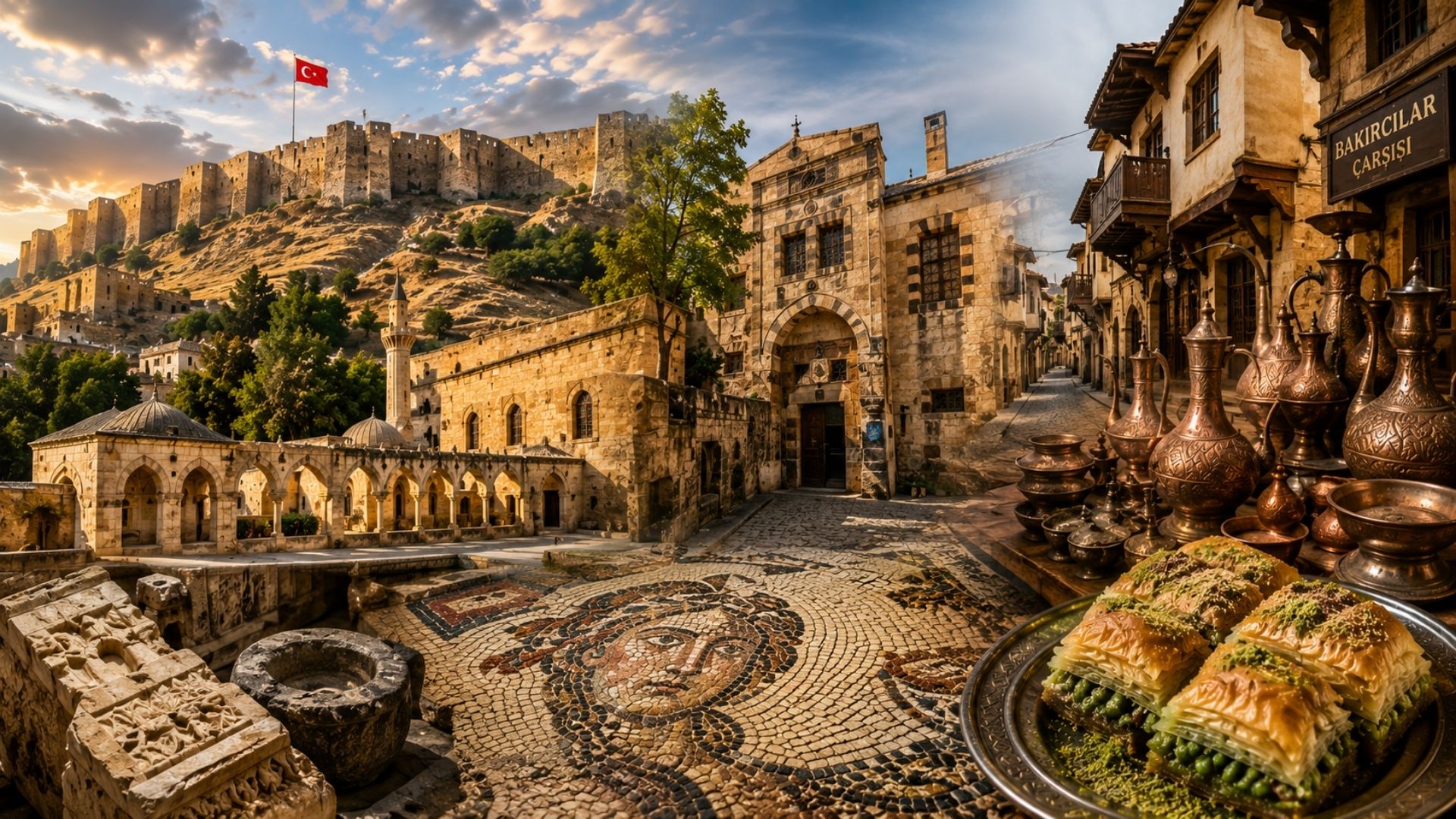
Located in the city center, the castle was originally built for observation purposes during the Roman Empire period, and was expanded to close to its current appearance during the Byzantine era. It later underwent various repairs during the Seljuk and Ottoman periods before reaching the present day.
Notable for its high walls, towers, and impressive architecture, Gaziantep Castle is one of the finest spots to take in a panoramic view of the city.
Ancient City of Zeugma and Its Mosaic Heritage
One of the most important assets that has made Gaziantep known worldwide is the ancient city of Zeugma.
Founded on the banks of the Euphrates River during the Roman period, Zeugma is considered one of the wealthiest cities of its era. The mosaics uncovered during excavations are regarded as among the world’s most significant archaeological discoveries.
Today, most of these artifacts are displayed at the Zeugma Mosaic Museum. The “Gypsy Girl” mosaic in particular has become one of Gaziantep’s symbols.
These artifacts are of great importance not only artistically but also for reflecting the Roman-era way of life.
Historic Bey Neighborhood
One of the areas where you can best feel Gaziantep’s past is the Historic Bey Neighborhood.
Thanks to its restored stone mansions, narrow streets, courtyard houses, and traditional architecture, visitors are transported back to the Ottoman era.
Many buildings in the neighborhood today serve as art galleries, boutique hotels, museums, and cafés. In this way, the historic fabric has been preserved while the area has also been developed for tourism.
It’s one of Gaziantep’s most striking spots for photography enthusiasts and history buffs.
Bakırcılar Bazaar and Traditional Handicrafts
One of the most important parts of Gaziantep’s cultural identity is its traditional handicrafts.
In Bakırcılar Bazaar, which has a history of hundreds of years, craftsmen still produce copper products by hand. As you stroll to the sound of hammering, you can closely observe Gaziantep’s living culture.
In addition to copperwork, traditional crafts such as:
- Mother-of-pearl inlay
- Yemeni (traditional handmade shoe) production
- Wood carving
- Kutnu fabric weaving
are also important parts of Gaziantep’s culture.
Gaziantep Mevlevi Lodge
One of the important structures representing the city’s spiritual heritage is the Gaziantep Mevlevihane.
Built in the 17th century, the structure is considered one of Anatolia’s important Mevlevi lodges.
Now serving as a museum, the Mevlevihane offers visitors:
- Sufi culture
- Mevlevi garments
- Manuscripts
- Religious artifacts
With its quiet atmosphere and historic architecture, it’s an important stop for those wanting to get closely acquainted with Gaziantep’s cultural heritage.
Caravanserais and Historic Bazaars
The historic caravanserais and bazaars that carry Gaziantep’s trading past into the present are inseparable parts of the city’s cultural fabric.
Zincirli Bedesten, Kemikli Bedesten, Almacı Bazaar, and various historic caravanserais are still actively used today.
As you wander through these areas, you can both shop and experience a trading culture that has continued for centuries.
With their stone architecture and traditional shops, these bazaars are among Gaziantep’s most vibrant spots.
Gaziantep’s Cultural Heritage
Gaziantep’s cultural heritage doesn’t consist only of historical structures. The city also stands out for its traditional way of life, handicrafts, cuisine, and festivals.
Many traditions are still upheld in Gaziantep. From weddings to holiday feasts, from coppersmithing to local garments, many cultural elements continue to be part of daily life.
Crafts such as kutnu fabric weaving, coppersmithing, and yemeni production are recognized by UNESCO as cultural heritage worth preserving.
Discover History Through Gaziantep’s Museums
Gaziantep is one of Turkey’s richest cities in terms of museums.
Among the main museums you can visit in the city are:
- Zeugma Mosaic Museum
- Gaziantep Archaeology Museum
- Emine Göğüş Culinary Museum
- Hamam (Bathhouse) Museum
- Mevlevihane Foundation Museum
- Panorama December 25th Museum
- Game and Toy Museum
These museums make it possible to explore Gaziantep’s thousands-of-years-old past in chronological order.
The Best Route for Discovering Gaziantep’s History
For visitors who want to closely experience Gaziantep’s historic atmosphere, the ideal touring route starts from the city center.
You can first explore Gaziantep Castle and the historic streets around it, then visit Bakırcılar Bazaar and Almacı Bazaar. Afterward, you can take a walk through Bey Neighborhood to discover the traditional stone houses, and later in the day, visit the Zeugma Mosaic Museum.
This route lets you experience both the city’s architectural heritage and its cultural richness together.
With its thousands-of-years-old past, Gaziantep, one of Anatolia’s most deep-rooted cities, offers its visitors a unique experience where history, culture, and art are intertwined. Gaziantep’s history has been shaped by the traces left by different civilizations, successfully surviving to the present day with its castles, ancient cities, caravanserais, museums, and stone streets. If you want to explore the historic sites of Gaziantep and get closely acquainted with the city’s unique cultural heritage, this ancient city promises you an unforgettable cultural journey. As you tour Gaziantep, you’ll have the chance to discover not only its historic buildings but also the traditions and rich cultural fabric that have continued to live on for centuries.